![[personal profile]](https://www.dreamwidth.org/img/silk/identity/user.png) 221bcrow
221bcrow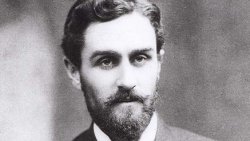

The Sherlock Special: Arthur Conan Doyle, The Black Diaries, and 1895.
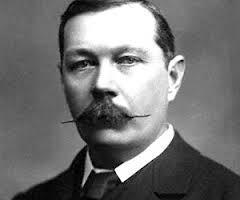
by ghislainem70Arthur Conan Doyle was acquainted with two of the most notorious and reviled homosexuals in Britain: Oscar Wilde and Roger Casement. Both men arguably have some influence on ACD’s Sherlock Holmes stories.
Arthur Conan Doyle became friends with Sir Roger Casement, a British Consul who reported on human rights abuses in the Congo. Doyle commented upon Casement’s character in his book The Crime of the Congo: “Personally, he is a man of the highest character, truthful, unselfish – one who is deeply respected by all who know him.” On June 24, 1910, Doyle invited Casement to join him and his wife Jean to dinner and to see his play The Speckled Band. Presumably unbeknownst to Doyle, later that evening Casement sought the company of male prostitutes, as recorded in Casement’s private journals, called the “Black Diaries.”
A few years later, Casement became involved with the Irish separatist movement. In April 1916, Casement was arrested for aiding in the “Easter Rising.” He was convicted of treason on irrefutable evidence.
ACD wrote a petition on Casement’s behalf to seek clemency, arguing Casement’s “abnormal physical and mental state” from serving in the Congo and Peru, where he contracted tropical fevers. The Foreign Office fought back. It had possession of Casement’s personal diaries, the so-called “Black Diaries,” which revealed Casement’s homosexuality and illegal acts with men and boys whom Casement generally paid for sex.
ACD was summoned to the Foreign Office. Doyle wrote after the meeting: “They told me [Casement’s] record for sexual offenses was bad and had a diary of his in proof of it. I had of course heard this before, but as no possible sexual offense could be as bad as suborning soldiers from their duty, I was not diverted from my purpose. Nonetheless, it is of course very sad, and an additional sign of mental disorder.”
It is fairly clear from this that ACD refused to peruse the Black Diaries when offered them. It was common knowledge that the Black Diaries described Casement hiring men and boys for sex, and ACD says he “heard this before.” If ACD had read them, here is an example of what Doyle would have seen :
JULY 28th. Hotel. £1.0. Splendid …Soft as silk big and full of life…wants awfully & likes very much.
9 THURSDAY. Magnificent young Cholo policeman passed with fine big one… Could see it plainly long and stiff…
For many years after Casement’s death his supporters claimed the Black Diaries were forgeries to discredit him, but recent forensic handwriting analysis confirms they are Casement’s own handwriting.
Casement was hanged for treason at Pentonville Prison on August 3, 1916 despite Arthur Conan Doyle’s public efforts to spare his life. ACD steadfastly supported Casement to the end, unlike many other public figures who shrank from association with the “notorious sodomite.”
In 1917, Arthur Conan Doyle published His Last Bow, or, The War Service of Sherlock Holmes, the last chronological Sherlock Holmes story. In HLB, Holmes is pulled from his beekeeping retirement at the Sussex cottage at the Prime Minister’s personal request. Holmes works undercover for the two years disguised as one “Altamont,” an Irish-American revolutionary who “graduated in an Irish secret society,” “a real bitter Irish-American…” Holmes foils an espionage plot by the German Von Bork by penetrating his spy network in his “Altamont” disguise. This is the story in which Holmes tells Watson that this may be their last meeting, and says, “Good old Watson! You are the one fixed point in a changing age. There’s an east wind coming all the same, such a wind as never blew on England yet.”
HLB can be read on several levels, mainly as a patriotic story of World War I, but also as a tribute by ACD to his tragic friend Casement, the Irish revolutionary, giving him the heroic ending ACD would have far preferred. It is also noteworthy that Sherlock Holmes’ alter-ego in HLB, “Altamont,” was ADC’s father’s middle name (the artist Charles Altamont Doyle, 1832-1893), and as such suggests that ACD sympathized and even identified with Casement, and wasn’t afraid even after Casement’s execution for treason and notorious “outing” as a homosexual by publishing of the Black Diaries to create such an inference, for those who knew where to look.
It is true that ACD sought to “excuse” Casement’s homosexuality as an “illness.” ACD had the same attitude toward Oscar Wilde. ACD famously met Oscar Wilde in 1889 at a dinner party, which ADC referred to in his memoirs as “a golden evening.” Some have pointed out that Thaddeus Sholto in The Sign of Four (1890) appears inspired by Oscar Wilde, the most famous aesthete of his age, and who possessed the facial features and mannerism mentioned by ACD:
“Nature had given him a pendulous lip, and a too visible line of yellow and irregular teeth, which he strove feebly to conceal by constantly passing his hand over the lower part of his face. “… Pray step into my little sanctum. A small place, miss, but furnished to my own liking. An oasis of art in the howling desert of South London.” …We were all astonished by the appearance of the apartment into which he invited us… . The richest and glossiest of curtains and tapestries draped the walls, looped back here and there to expose some richly-mounted painting or Oriental vase… . A lamp in the fashion of a silver dove was hung from an almost invisible golden wire in the centre of the room.”
Oscar Wilde’s first public persecution over hints of homosexuality arose when The Picture of Dorian Gray was published in a magazine in 1890. Wilde was publicly condemned for its homoeroticism and decadence. When Dorian Gray was published as a novel, Wilde was forced to tone down the homoerotic elements.
ACD, a budding literary figure himself, could not have been unaware of the nature of the controversy concerning Wilde and Dorian Gray, yet he took the trouble to write to Wilde to praise Dorian Gray. Wilde wrote to ACD in reply, “I am really delighted that you think my treatment subtle and artistically good.”
In 1895, Oscar Wilde was convicted for gross indecency for homosexual acts (with prostitutes), and sentenced to two years hard labor in prison, which broken his health and sent him to an early grave. In his memoirs, ACD stated that Wilde’s homosexuality was “pathological” and that Wilde should have been put in a hospital rather than tried for homosexual acts. ACD remarked that on the last occasion he met Wilde, shortly before his trial, he thought him “mad.”
After Wilde’s death, during ACD’s spiritualist period, ACD invited a medium who claimed to be in contact with Oscar Wilde to ask Wilde to communicate with him, because “there are some things I should wish to say.”
In his relations, such as they were, with Roger Casement and Oscar Wilde, ACD displayed the most liberal view on homosexuality for Victorian times, attributing it to mental disorder, rather than moral depravity. ACD being a medical man may have given him a predisposition toward this view. (If ACD were living today I have no doubt that noble man would be as accepting as we would all wish. In his own life, ACD experienced the pain of not being able to fully be with the woman he loved and later married, but that is for another post perhaps.)
Casement and Wilde were the two most notorious and publicly vilified homosexuals of ACD’s times. Yet Doyle did not shrink from them, he offered these men his respect, empathy, and as to Casement, critical public support. Arguably, both men have the honor to have been immortalized in the Sherlock Holmes stories.
Finally, Mark Gatiss’ remarks that the Sherlock Victorian Special simply had to be set in 1895, the year of Oscar Wilde’s trial, may be more significant in light of the complexity of ACD’s involvement and attitudes toward these two men, who in their lives were disgraced for their sexual orientation.


